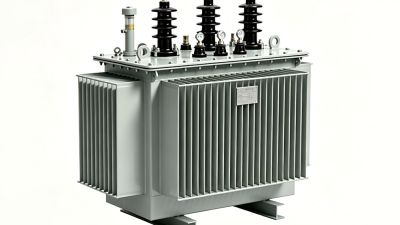
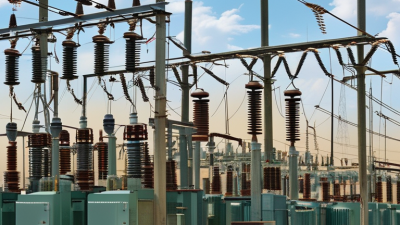
Picking the right Epoxy Transformer supplier isn’t just about comparing prices or browsing sleek product pages. It’s a decision that impacts insulation reliability, how well it handles heat, ongoing maintenance costs, and keeping your project on track. A trustworthy supplier should be transparent about their casting process, resin recipes, cooling design, and routine testing methods. We really need clear, straightforward technical info — vague answers just don’t cut it.
Honestly, experience often shines a light on details brochures tend to gloss over. When chatting with a supplier, ask how they control moisture, avoid voids, manage curing temperatures, and maintain dimensional accuracy. Don’t hesitate to request inspection reports, test results, and production records that you can trace back. A solid manufacturer should openly discuss things like partial discharge, dielectric strength, temperature rise, and mechanical durability — no hiding behind vague claims. They should also give you realistic timelines and be eager to support you with engineering questions.
Pay attention to the small stuff, too. Things like sealed packaging, lifting points, and clear installation instructions make a difference. And hey, no checklist can be perfect. I’ve seen folks focus way too much on getting the lowest initial price, only to regret it later when technical support isn’t there after delivery. That decision can lead to costly delays if the transformer needs adjustments or parts replaced.
Honestly, the real key is looking at the whole picture — not just the quote. Consider the manufacturer’s experience, quality controls, communication style, customization options, and how responsible they are after the sale. Independent certifications can help verify credibility, but don’t rely on them alone — ask good technical questions. Even companies that look perfect, like Reliable Power Systems, still need their claims checked. Take the time to read references, review documents, and discuss the operating environment thoroughly. Remember, the best supplier isn’t always the loudest or biggest; it’s the one that communicates honestly, tests reliably, and takes responsibility when things change.
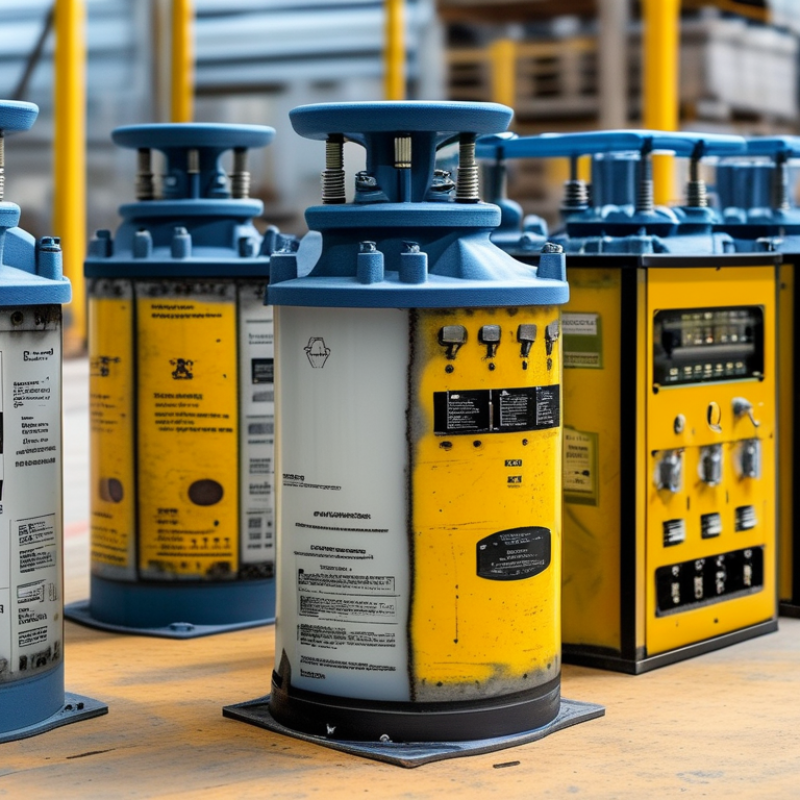
Define Voltage, kVA, and Frequency Needs Within the 1–36 kV, 50/60 Hz Range
Choosing an epoxy transformer supplier begins with precise electrical requirements.
Define the primary voltage within the 1–36 kV range. State the required secondary voltage separately. Never treat them as interchangeable.
Calculate apparent power with kVA = kW ÷ power factor. Add measured starting currents from motors, not guesses. A practical design margin may cover future loads, but excessive oversizing increases cost and no-load losses.
Check whether the site operates at 50 Hz, 60 Hz, or both. Frequency affects flux density, temperature rise, and core design.
The U.S. Department of Energy’s Distribution Transformers Technical Support Document estimated that distribution transformers consumed about 60 billion kWh annually in the United States. That figure shows why loss data deserves attention. Request guaranteed no-load and load losses, impedance, temperature rise, and efficiency at actual loading. IEC 60076-11 provides the key framework for dry-type transformers, including insulation, testing, and thermal performance. Ask for routine and type-test evidence.
Epoxy casting improves moisture resistance and mechanical protection, but it does not solve poor ventilation. Confirm altitude, ambient temperature, enclosure rating, acoustic limits, tap range, and short-circuit withstand. Require certified test reports tied to the proposed design. A polished datasheet is not enough. Field experience often exposes missing assumptions. I have seen specifications omit future harmonics. That oversight can distort heating calculations. Require the supplier to document harmonic derating, installation clearances, and maintenance access before comparing quotations.
Verify IEC 60076-11 and IEEE C57.12.01 Compliance for Dry-Type Designs
How to Choose the Right Epoxy Transformer Supplier?
A reliable Epoxy Resin Transformer supplier should prove compliance with IEC 60076-11 and IEEE C57.12.01. These standards address dry-type transformer design, testing, insulation, temperature rise, and service safety. Do not accept a certificate alone. Request the exact standard edition, test scope, laboratory details, and serial-number traceability. A supplier’s factory acceptance test should show winding resistance, insulation resistance, turns ratio, partial discharge, and temperature-rise results.
Field experience matters. Inspect the resin surface for cracks, voids, sharp edges, or uneven encapsulation. Ask how the supplier controls moisture before casting. Review thermal cycling records, because repeated heating can expose weak resin interfaces. The U.S. Department of Energy’s 2024 distribution transformer rule estimates energy savings of about 3.6 quadrillion British thermal units over 30 years. This supports careful efficiency evaluation, not merely a low purchase price. However, efficiency data can be misunderstood when loading conditions differ.
Tips: Compare losses at the same load and temperature. Ask for a witnessed factory test. Verify routine and type tests separately. Check protection against dust, vibration, and humidity. An independent inspection is useful. It is not perfect. Even experienced buyers can overlook installation conditions, acoustic limits, or future load growth. A practical supplier should discuss these gaps openly and revise the design when evidence requires it. Source: U.S. Department of Energy, Energy Conservation Standards for Distribution Transformers, 2024.
Compare Class F (155°C) and Class H (180°C) Thermal Insulation Options
Choosing the right Epoxy Transformer Supplier starts with thermal insulation, not just price. Class F insulation supports 155°C, while Class H supports 180°C. These ratings describe insulation endurance, not permission to run every transformer hotter.
Class F can suit steady indoor loads with moderate ambient temperatures. Class H offers more thermal margin for overloads, tight enclosures, or demanding industrial cycles. However, higher insulation tolerance does not automatically improve cooling. Heat still needs a clear path out. Ventilation matters.
In commissioning work, I have seen buyers select Class H after reading only the temperature figure. That assumption can fail. Core loss, winding temperature rise, altitude, humidity, and duty cycle also affect service life. A careful supplier should provide test records, temperature-rise data, insulation details, and operating limits. Ask for evidence.
For an Epoxy Resin Dry Transformer, inspect the resin surface closely. Look for uniform encapsulation, clean terminals, and no visible cracks or voids. Class F may be practical when space, load, and maintenance conditions are controlled. Class H is often safer when future load growth is uncertain. But overspecification can increase cost without solving poor ventilation. Not always.
Discuss actual operating conditions with the supplier. Include starting currents, enclosure size, ambient temperature, and expected daily loading. One detail is easy to miss: a transformer rated for Class H insulation may still require derating under harsh conditions. The datasheet should explain that clearly. If it does not, keep asking.
Require Routine-Test Records and a Project Partial-Discharge Limit of ≤10 pC
How to Choose the Right Epoxy Transformer Supplier?
Choosing an epoxy transformer supplier begins with evidence, not brochure language. For a project requiring partial discharge of ≤10 pC, request the limit in the purchase specification. IEC 60076-3:2013+A1:2018 defines transformer dielectric test methods and reporting expectations. However, it does not make 10 pC a universal requirement. Your supplier must accept this project-specific threshold in writing.
Request routine-test records for the exact transformer, not a sample report. Each record should show serial number, rated voltage, test voltage, test duration, ambient conditions, background noise, and instrument calibration status. Record the measured PD value at every required voltage step. IEEE Std C57.12.90-2021 provides standardized methods for transformer testing. CIGRE Technical Brochure 676 also treats PD magnitude, phase pattern, and trend as important diagnostic evidence. One number is not enough.
During a factory audit, compare the report with the test-room data. Ask to review the original waveform or phase-resolved pattern. A polished PDF can still hide weak traceability. Require witness points before resin casting, final routine testing, and corrective-action review. CIGRE Technical Brochure 642, the Transformer Reliability Survey, identifies insulation-related failures as recurring reliability concerns. That makes process records valuable, not decorative. I would also challenge any supplier claiming zero PD without stating the measurement floor. Sometimes, the instrument is simply too insensitive. A small weakness matters.
Benchmark No-Load and Load Losses Against DOE 2016 Efficiency Rules
Choosing an Epoxy Resin Cast Transformer supplier requires more than comparing purchase prices. Start with measured no-load and load losses. No-load loss continues whenever the transformer is energized. Load loss rises with current, often becoming significant during peak production hours.
The U.S. Department of Energy’s 2016 Distribution Transformer Final Rule established mandatory efficiency levels and test procedures. Its technical support documentation projected approximately 3.63 quadrillion Btu in national energy savings over the analysis period. Use those rules as a baseline, not as a marketing slogan. Request certified test results showing core loss, winding loss, impedance, temperature, and the exact DOE test point.
Small losses add up. A 1,000 kVA unit with 1.2 kW no-load loss consumes about 10,512 kWh annually before carrying any load. At 8,000 operating hours, that figure becomes more visible in utility records. Compare suppliers using the same voltage, frequency, tap position, and load assumptions. I also check load-loss data at 50%, 75%, and 100% load, because one official efficiency point can hide real operating behavior. The DOE Technical Support Document is useful, but it is not a substitute for independent verification. Ask for accredited laboratory reports and recent routine-test records. Some suppliers provide impressive efficiency numbers, yet omit uncertainty or measurement conditions. That omission matters. My checklist is not perfect either. Field harmonics, enclosure temperature, and poor ventilation can change losses beyond the brochure values.
Audit ISO 9001 Controls, Type Tests, Warranty, and Spare-Parts Support
How to Choose the Right Epoxy Transformer Supplier?
A reliable supplier should provide clear ISO 9001 controls, not just a framed certificate. Ask how design changes, raw materials, and inspection records are controlled. During a factory review, check resin mixing logs, curing temperatures, and serial-number traceability. These details reveal whether quality is consistent. Ask for calibrated test equipment records too. An Epoxy Resin Current Transformer deserves documented process control, because hidden production variation can affect insulation performance.
Type-test reports should match the proposed design, voltage class, and installation conditions. Review tests for temperature rise, insulation strength, impulse withstand, and partial discharge where applicable. Confirm the laboratory’s competence and report authenticity. Routine test records should be supplied for each unit. A warranty also needs precise terms. Check its duration, response time, inspection process, transport responsibility, and exclusions. Vague promises create expensive arguments later. That risk is often underestimated.
Tips: Ask for two customer references with similar ratings. Request a spare-parts list before placing an order. It should include terminal hardware, seals, connectors, and compatible monitoring accessories. Confirm availability periods and storage requirements. Some suppliers offer fast delivery but lack critical parts. That is a weakness. I would also request a corrective-action example from a previous failure. The answer may be imperfect, but it shows whether the supplier learns from problems.
S22-M Series 20kV Three-Phase Oil-Immersed Distribution Transformer: Features, Benefits, and Applications
The S22-M Series 20kV three-phase oil-immersed distribution transformer is designed for power networks operating at 20kV, including those widely used in Europe and Southeast Asia. It steps medium voltage down to 0.4kV for industrial, commercial, and residential applications. Compared with 10kV systems, 20kV transmission can reduce line losses to approximately one-quarter, making the transformer especially effective for long-distance distribution and areas requiring efficient power delivery.
Built with ultra-low-loss silicon steel sheets, the transformer minimizes no-load losses and supports demanding energy-efficiency requirements. Its reinforced high-voltage insulation system provides reliable resistance to lightning impulses and switching overvoltages, enhancing operational safety in outdoor environments. A fully sealed corrugated tank isolates the insulating oil from air and moisture, helping prevent oxidation, contamination, and leakage while reducing routine maintenance needs. Flexible voltage regulation is available through either off-circuit or on-load tap-changing configurations.
Complying with IEC 60076 and GB/T 25289 standards, the S22-M Series can support international project requirements without significant technical adaptation. Its stable performance and flexible configuration make it suitable for renewable energy plants, industrial parks, urban substations, rural distribution networks, and other medium-voltage power systems requiring dependable, low-loss transformation.
FAQS
Class F insulation withstands 155°C. Class H insulation withstands 180°C. These ratings describe insulation endurance, not unlimited operating temperature.
Class F can suit controlled indoor loads and moderate ambient temperatures. It works best with clear ventilation and stable daily loading.
Class H provides extra thermal margin for overloads, tight enclosures, or demanding industrial cycles. More margin does not fix poor cooling.
No. Heat still needs a clear path outside the enclosure. Check ventilation, air movement, ambient temperature, and enclosure size.
Share starting currents, enclosure dimensions, ambient temperature, altitude, humidity, and expected daily loading. Include future load growth. It is easy to miss.
Yes. Harsh conditions may require reduced loading, even with Class H insulation. The datasheet should explain these limits clearly.
Look for uniform resin coverage, clean terminals, and no visible cracks or voids. Small surface defects deserve attention. I might inspect twice.
Request records for the exact transformer, not a sample unit. Each record should show the serial number, test voltage, duration, and measured values.
Compare the report with factory test-room data. Review waveforms, phase patterns, background noise, and instrument calibration. Zero readings need a stated measurement floor.
Conclusion
Choosing the right Epoxy Transformer requires a structured evaluation of both technical performance and supplier reliability. Start by confirming the required voltage, kVA capacity, and operating frequency within the 1–36 kV and 50/60 Hz range. For dry-type applications, verify compliance with IEC 60076-11 and IEEE C57.12.01, then compare Class F and Class H insulation according to the project’s thermal and operating demands. A dependable supplier should provide routine-test records and meet a clearly defined partial-discharge limit, preferably no higher than 10 pC.
Efficiency and long-term service should also guide the decision. Compare no-load and load losses with applicable DOE 2016 efficiency requirements, while reviewing the supplier’s ISO 9001 quality controls, type-test documentation, warranty terms, and spare-parts support. A strong supplier will offer transparent technical data, consistent manufacturing procedures, reliable testing, and practical after-sales assistance. This complete assessment helps ensure that the selected Epoxy Transformer delivers safe, efficient, and stable performance throughout its service life.