Leave Your Message
Engineered to meet the stringent technical demands of modern utility-scale solar farms, onshore/offshore wind substations, and regional distribution networks.
Accelerating decarbonization mandates have turned solar photovoltaic (PV) parks and wind turbine clusters into central pillars of global power systems. This massive transition poses sophisticated challenges for grid telemetry, dynamic protection, and tariff settlement.
The rapid expansion of multi-megawatt solar inverter stations and high-capacity wind turbine platforms demands cost-effective, space-saving, and highly reliable medium-to-high voltage instrumentation. A CT-VT Combined Instrument Transformer (also known as a Combined Metering Unit, MOF, or JLS-series unit) integrates both Current Transformers (CT) and Voltage/Potential Transformers (VT/PT) into a single, compact monolithic tank or cast-resin body.
In renewable Point of Common Coupling (PCC) applications, footprint optimization translates directly to lower civil engineering expenditures, simplified busbar architectures, and curtailed maintenance overheads. By reducing the number of standalone bushings and installation footprints by up to 50%, combined units streamline substation layouts for both ground-mounted central inverters and wind farm collector substations.
Integrating metering and protection cores into one hermetically sealed tank cuts primary cabling costs, minimizes high-voltage connection points, reduces partial discharge risks, and provides utility-grade tariff accuracy up to Class 0.2S.
From step-up skid substations to utility interconnect bays, CT-VT combined instrument transformers provide mission-critical measurement nodes across all renewable voltage levels (10kV, 24kV, 35kV, 66kV, and 110kV).
In modern centralized PV arrays, 1500V DC power is converted to medium voltage (typically 35kV or 34.5kV) through integrated transformer skid stations. CT-VT combined units installed on the 35kV output side provide simultaneous feeder protection and localized generation revenue metering, communicating directly with SCADA systems via Modbus or IEC 61850 protocols.
Wind power collection circuits link multiple turbine towers along radial or ring topologies. CT-VT combined transformers placed at the base switchgear or primary ring main units (RMU) handle directional overcurrent, earth fault detection, and zero-sequence voltage monitoring, shielding upstream substation transformers against grounding disturbances and cable charging currents.
At the main Point of Interconnection with the national transmission grid, revenue settlement units demand 0.2S class metering accuracy under temperature swings from -40°C to +55°C. Combined CT-VT units feature high magnetic permeability core materials (such as nanocrystalline or ultra-grain-oriented silicon steel) to avoid phase angle shifts and ratio drift.
Manufactured in strict adherence to IEC 61869-1, IEC 61869-2 (CT), IEC 61869-3 (VT), and IEEE C57.13 standards, ensuring maximum operational lifespan in demanding renewable microclimates.
| System Parameter | 10kV / 15kV Class | 35kV / 40.5kV Class | 66kV / 72.5kV Class | 110kV / 126kV Class |
|---|---|---|---|---|
| Rated Primary Voltage ($U_n$) | 10 kV / 11 kV / 13.8 kV | 33 kV / 35 kV / 38.5 kV | 66 kV / 69 kV | 110 kV / 115 kV |
| Rated Primary Current ($I_n$) | 5 A – 1200 A (Multi-Ratio) | 10 A – 2000 A (Multi-Ratio) | 50 A – 3000 A | 100 A – 4000 A |
| CT Accuracy Classes | 0.2S / 0.2 / 0.5S / 5P20 / 10P20 | 0.2S / 0.2 / 0.5S / 5P20 / 10P30 | 0.2S / 0.2 / 5P20 / 5P30 / PX | 0.2S / 0.2 / 5P20 / TPS / TPY |
| VT Accuracy Classes | 0.2 / 0.5 / 3P / 6P | 0.2 / 0.5 / 3P / 6P | 0.2 / 0.5 / 3P | 0.2 / 0.5 / 3P |
| Insulation Medium | Cycloaliphatic Epoxy / Oil | Oil-Immersed / Cast Resin | High-Grade Mineral Oil / SF6 | Hermetically Sealed Oil |
| Power Frequency Withstand | 28 kV / 38 kV (1 min) | 80 kV / 95 kV (1 min) | 140 kV / 160 kV (1 min) | 230 kV (1 min) |
| Lightning Impulse Withstand (BIL) | 75 kV / 95 kV Peak | 170 kV / 200 kV Peak | 325 kV / 350 kV Peak | 550 kV Peak |
| Partial Discharge Level | < 5 pC at 1.2 $U_m / \sqrt{3}$ | < 5 pC at 1.2 $U_m / \sqrt{3}$ | < 10 pC at 1.2 $U_m / \sqrt{3}$ | < 5 pC at 1.2 $U_m / \sqrt{3}$ |
Hanzhong Xinsanhuan Transformer Co., Ltd. is a professional transformer manufacturer located in Hanzhong City, Shaanxi Province, China—a renowned historical and cultural city known for its strategic geographical location at the heart of the country. Since its establishment, the company has been dedicated to the research, development, design, manufacturing, and service of high-quality power transmission and distribution equipment, providing reliable solutions to customers across domestic and international markets.
With decades of combined manufacturing leadership and continuous modernization of our production testing bays, we deliver high-integrity electrical apparatus custom-engineered for harsh grid conditions, fluctuating industrial burdens, and green utility generation.
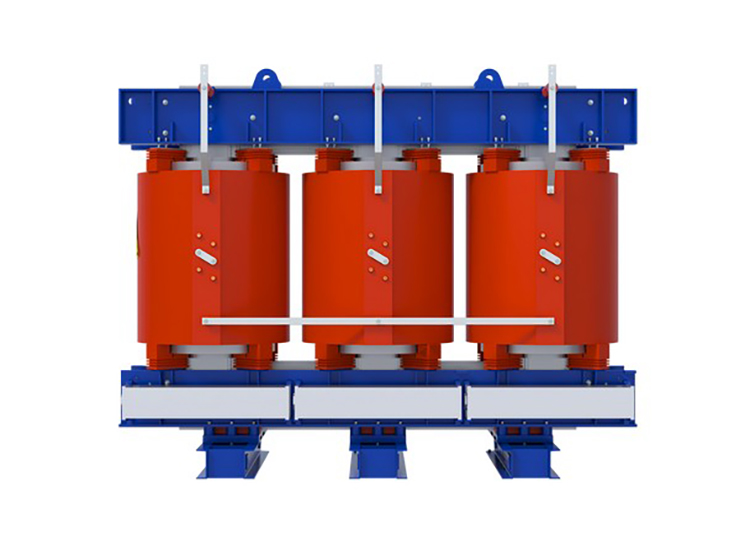
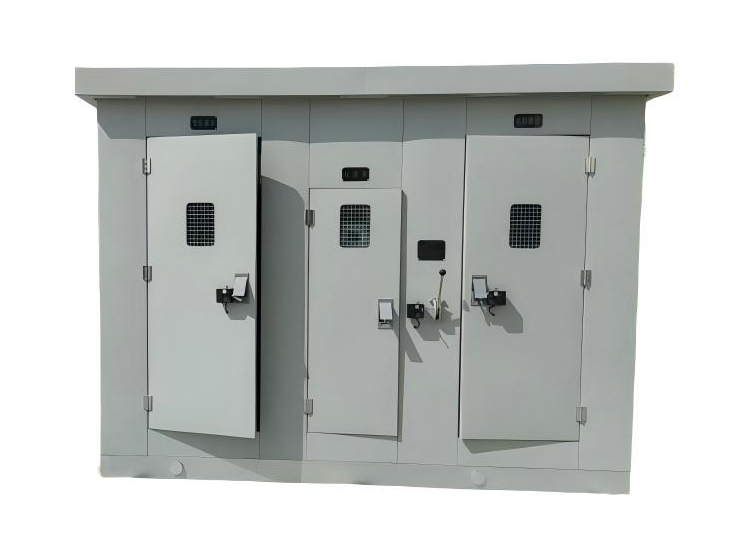
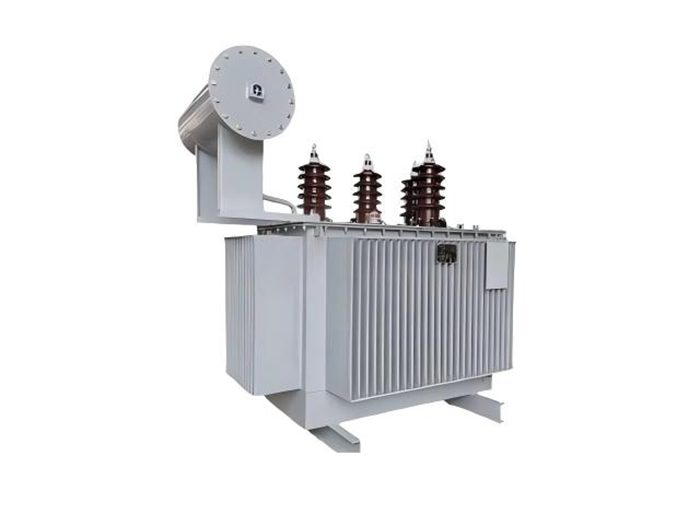
The company specializes in the production of power transformers up to 110kV, rectifier transformers, amorphous alloy transformers, oil-immersed distribution transformers, dry-type transformers, compact prefabricated substations, and other customized transformer solutions.
With years of industry experience and continuous technological innovation, XINSANHUAN has developed a comprehensive product portfolio capable of meeting the diverse requirements of power utilities, industrial facilities, renewable energy projects, infrastructure developments, and commercial applications.
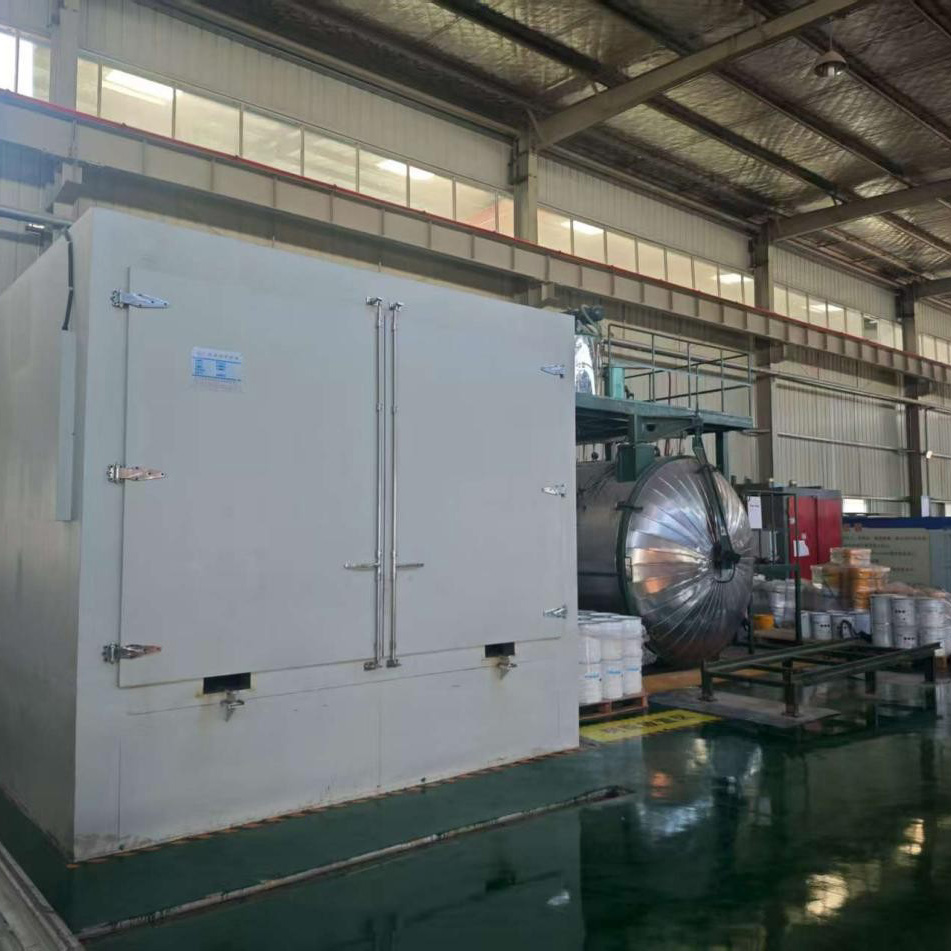
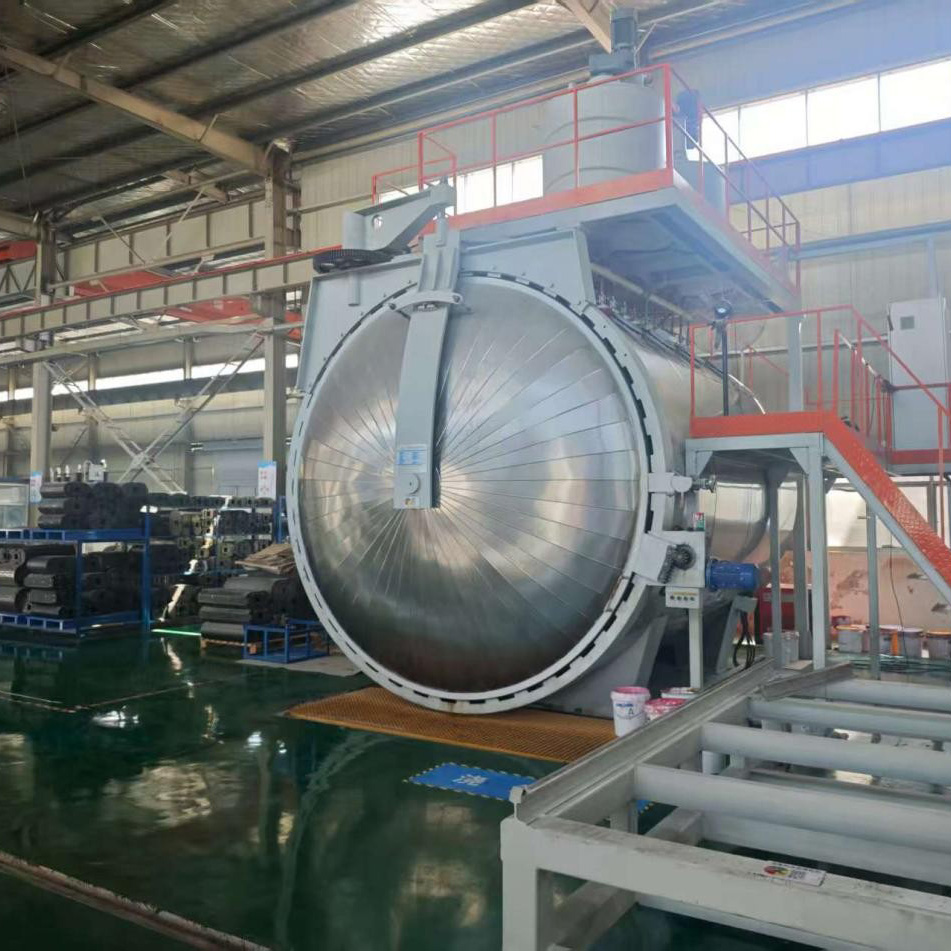
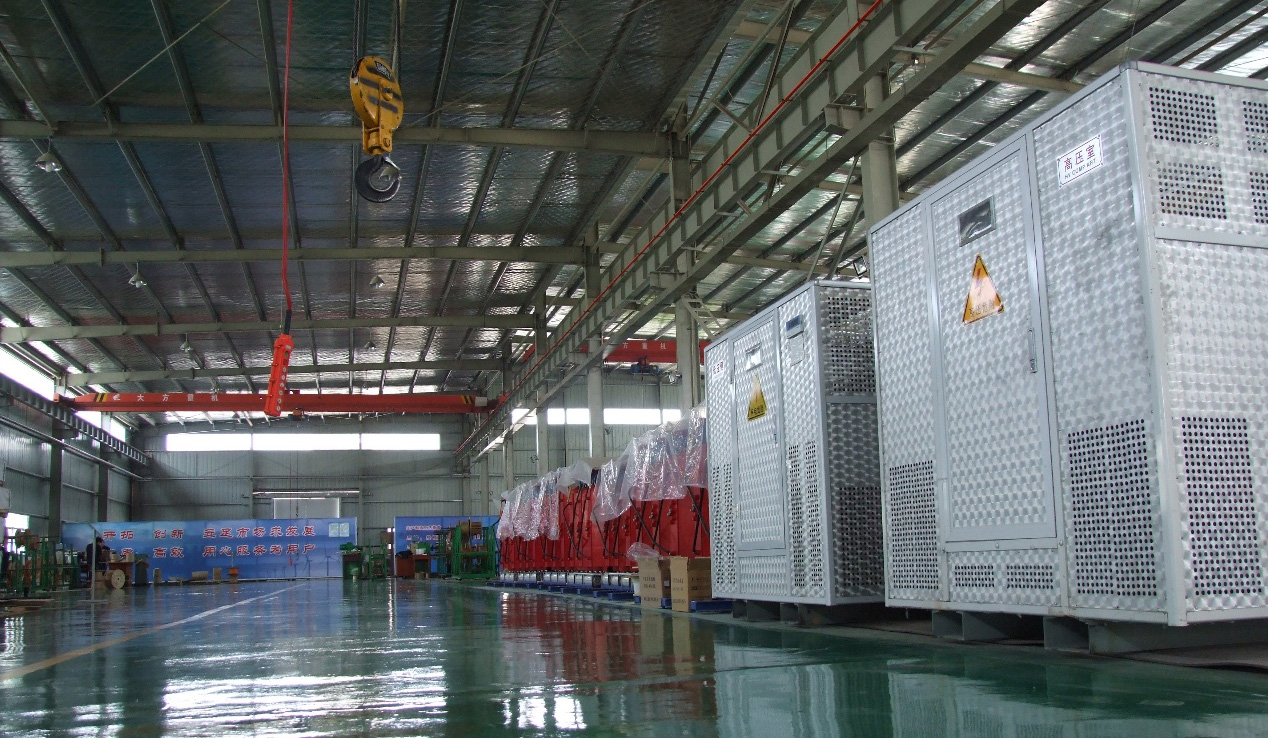
To ensure the highest standards of product quality and performance, the company has invested heavily in advanced manufacturing equipment, modern production lines, and comprehensive testing facilities. Supported by a highly qualified engineering and technical team, XINSANHUAN maintains strict quality control throughout every stage of production, from design and raw material procurement to manufacturing, testing, and final delivery.
The company’s robust research and development capabilities enable it to continuously improve product efficiency, reliability, and environmental performance in response to evolving market demands. Every CT-VT combined transformer and power distribution unit undergoes thorough dielectric, thermal, and accuracy validation before dispatch.
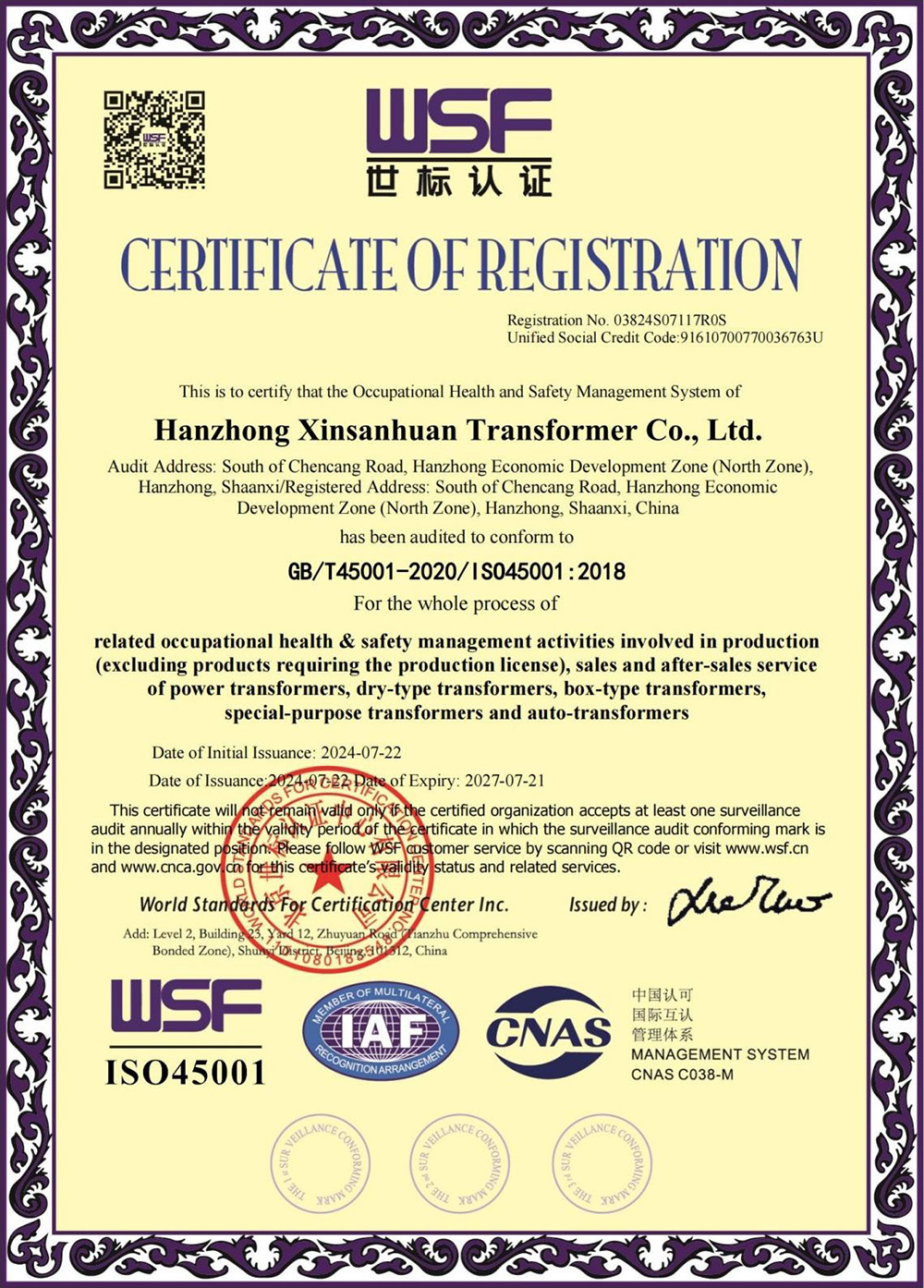
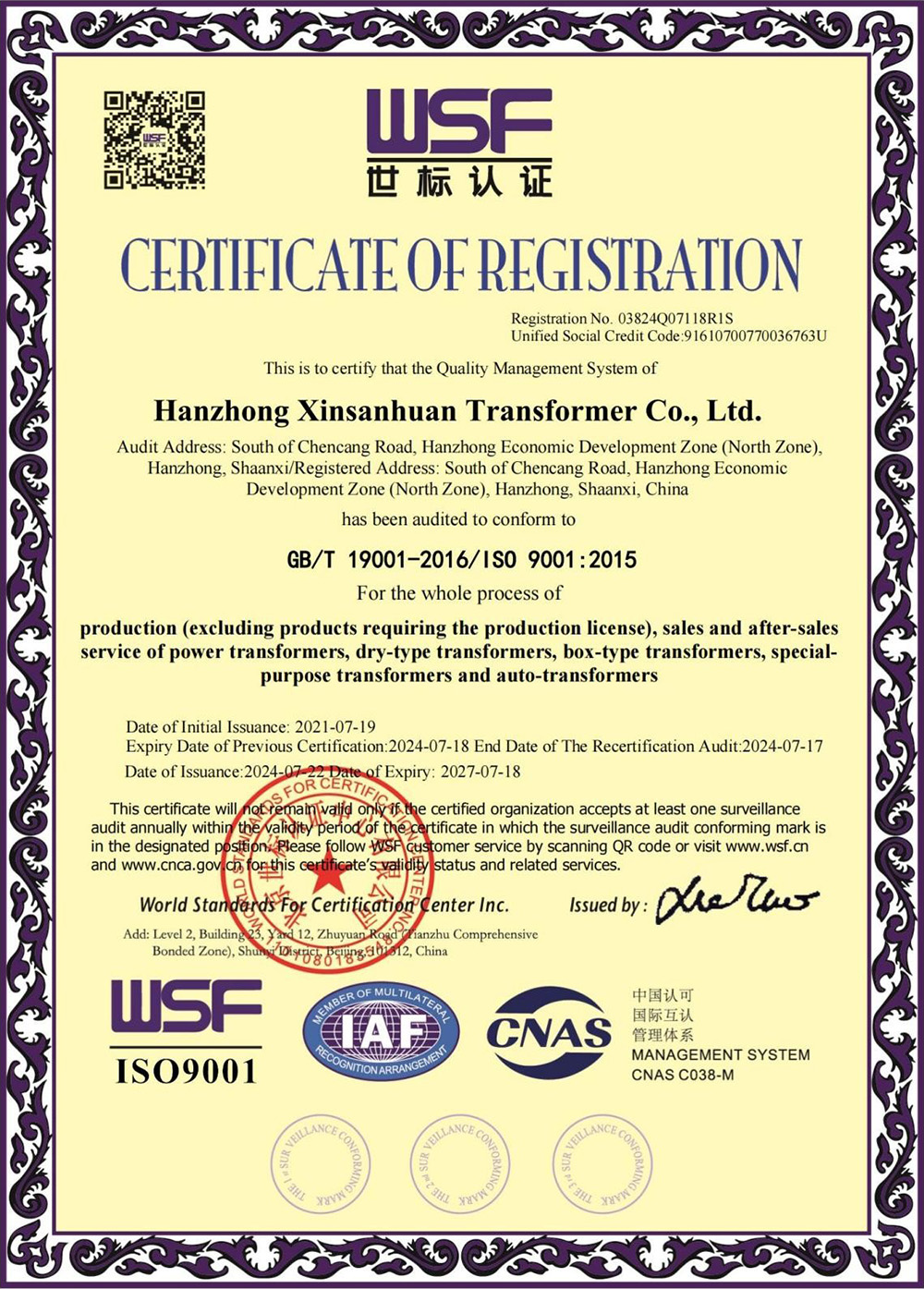
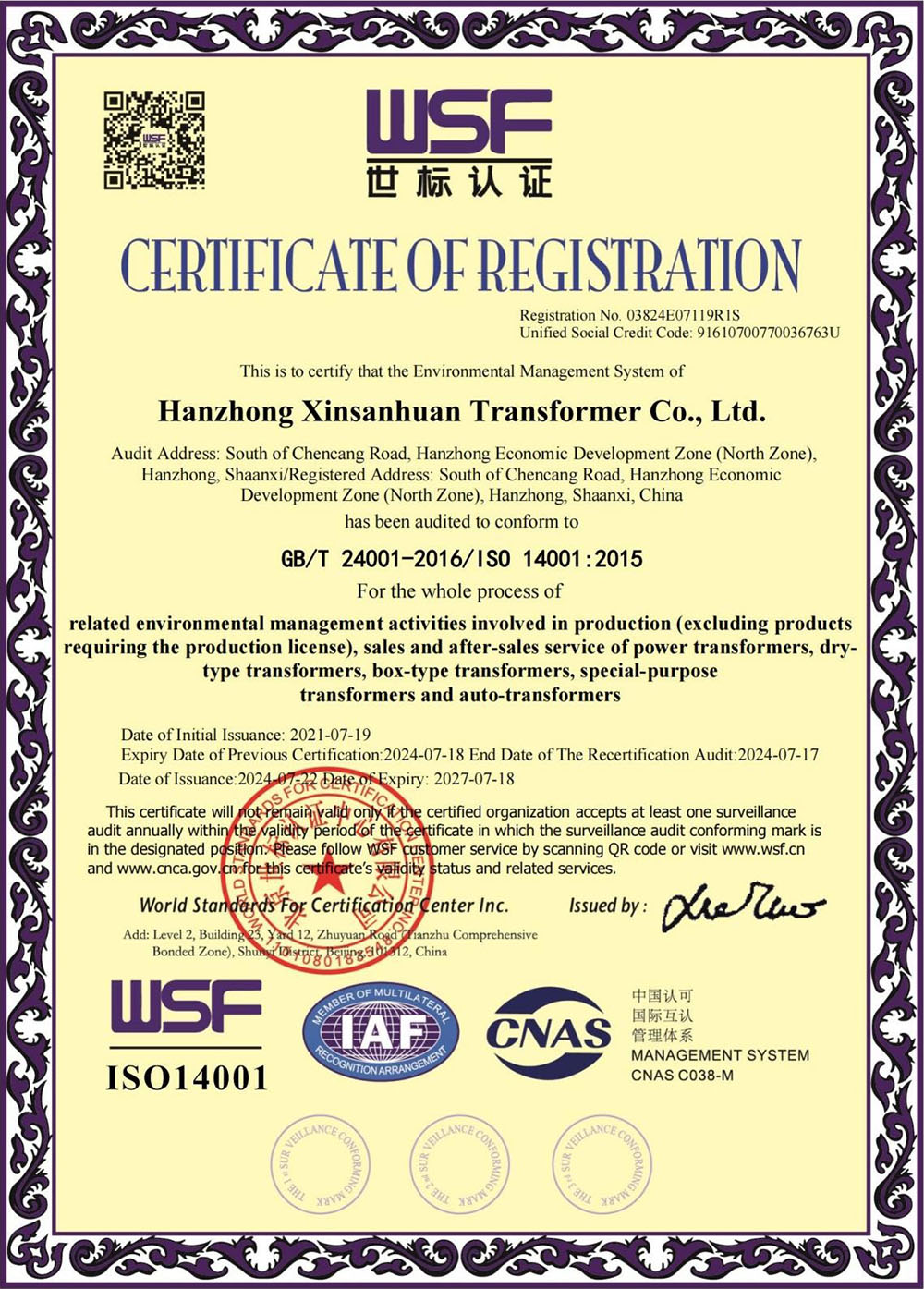
Since 2006, Hanzhong Xinsanhuan Transformer Co., Ltd. has established a comprehensive management system and obtained a series of internationally recognized certifications, including ISO 9001 Quality Management System Certification, ISO 14001 Environmental Management System Certification, and ISO 45001 Occupational Health and Safety Management System Certification.
The company has also received Energy-Saving Product Certification and has been honored with the title of Green Factory, reflecting its commitment to sustainable manufacturing practices and environmental responsibility.
As a recognized High-Tech Enterprise, XINSANHUAN places strong emphasis on technological advancement and intellectual property development. The company has obtained numerous national patents covering product design, manufacturing processes, and technical innovations. In addition, its products have achieved CE certification, enabling compliance with European market requirements and facilitating exports to a broader international customer base. The company also holds independent import and export rights, ensuring efficient global trade operations and responsive customer service.
Explore our comprehensive lineup of energy-efficient power transformers, earthing protection units, and heavy-duty grid interconnection solutions designed for global renewable infrastructures.
Key technical considerations for electrical consulting engineers, EPC contractors, and utility grid operators selecting combined CT-VT instrument units.
A combined CT-VT transformer merges current and voltage measurement elements inside a single housing. This slashes the switchgear footprint by up to 50%, halves the primary wiring and high-voltage terminations, reduces structural support steel, and minimizes potential leak points or dielectric interfaces. For compact containerized solar skid substations, this consolidation is critical to keeping skid dimensions transportable via standard ISO freight corridors.
Under IEC 61869-2, Class 0.2S current transformers provide extended high-accuracy measurement at extremely low current burdens (accurate down to 1% of rated primary current, compared to standard 0.2 class which is only rated down to 5%). Because wind turbines frequently operate under light-wind regime conditions producing only a fraction of nominal power, 0.2S accuracy guarantees that energy yields are metered precisely without revenue loss.
Long underground MV cable runs in wind and solar collection circuits present substantial capacitive charging. When combined with inductive potential transformers during single-phase ground faults or switching operations, non-linear ferroresonance can occur. Our CT-VT designs incorporate low-flux-density magnetic cores, optional open-delta damping resistors, and specialized tertiary winding damping reactors to completely eliminate core saturation and destructive oscillations.