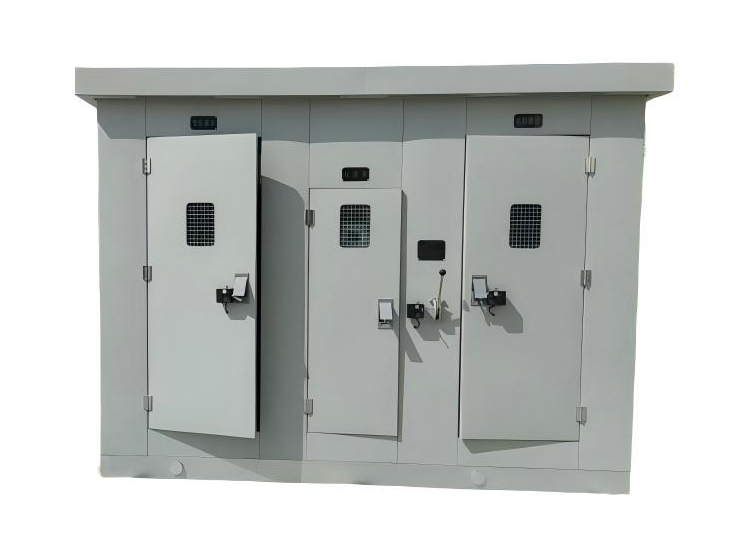
Leave Your Message
Engineered to mitigate harsh cyclic electrical shocks, stabilize grid voltages, and maximize thermal conversion efficiency across modern smelting operations.

The global steelmaking and metallurgical sector is undergoing the most monumental transformation since the advent of industrial automation. Driven by rigorous net-zero emissions mandates, escalating carbon taxation, and skyrocketing energy costs, primary steel manufacturers are systematically transitioning from traditional coal-fired Blast Furnace – Basic Oxygen Furnace (BF-BOF) routes to low-carbon Electric Arc Furnace (EAF), Submerged Arc Furnace (SAF), Direct Reduced Iron (DRI), and Hydrogen-based smelting architectures. However, this massive electrification introduces unprecedented electrical grid challenges that conventional substation equipment was never engineered to withstand.
Furnace power transformation demands enormous active power transfers while simultaneously generating violent stochastic load swings, rapid short-circuit fluctuations during scrap cave-ins, high-magnitude harmonic distortions (predominantly 2nd, 3rd, 5th, and 7th harmonics), severe three-phase unbalances, and debilitating voltage flicker ($P_{st}$ and $P_{lt}$). When multiple multi-megawatt furnace lines feed off the same transmission node or captive power plant, parallel line power flow congestion, uncoordinated reactive power circulations, and thermal overloads inevitably compromise substation longevity and trigger stringent grid utility penalty tariffs.
This is precisely where the Grid Phase-Shifting Transformer (PST), also recognized as a Phase Angle Regulating (PAR) Transformer or Quadrature Booster, becomes the indispensable linchpin of modern metallurgical electrical engineering. By dynamically modulating the relative phase angle between interconnected utility grids and industrial furnace distribution buses, Phase-Shifting Transformers provide active loop-flow mitigation, harmonic phase cancellation in multi-pulse rectifier systems (12-pulse, 24-pulse, and 48-pulse setups), precise power sharing across parallel transmission feeders, and comprehensive protection of upstream grid stability.
The fundamental operating principle of a Grid Phase-Shifting Transformer in metallurgical applications relies on injecting a controlled quadrature voltage ($\Delta V$) into the transmission circuit, thereby altering the terminal phase angle ($\theta$) without appreciably perturbing the system's baseline voltage magnitude. In symmetrical and asymmetrical quadrature booster configurations, the PST decomposes the three-phase incoming voltage and superimposes an induced perpendicular voltage component generated by a shunt excitation unit into a series booster winding:
From high-tonnage scrap recycling complexes to high-purity ferroalloy and silicon production, explore how customized transformer engineering solves power challenges across diverse industrial furnace typologies.
Accommodating repetitive short-circuit arc strikes, scrap bridging, and severe reactive power surges. Provides dynamic phase angle and tap positioning to stabilize secondary smelting arc lengths while isolating upstream grid nodes from high-frequency flicker.
Optimized for continuous high-current reductive smelting of ferrosilicon, ferrochrome, and silicon metal. Multi-winding phase-shifted configurations balance heavy electrode phase currents and mitigate structural eddy current heating in adjacent buswork.
Delivering precision temperature regulation and chemical homogenization power. OLTC-driven voltage and phase adjustment ensure smooth thermal holding with minimal harmonic pollution into plant-wide low-voltage control systems.
Feeding 12-pulse, 24-pulse, and 36-pulse heavy industrial rectifiers. Engineered secondary winding phase displacements eliminate 5th and 7th harmonic feedback into the primary transmission grid, drastically improving substation power factor.
Facilitating seamless power interchange between metallurgical captive thermal/gas-recovery power plants, on-site solar/wind installations, and regional 110kV/220kV national transmission utilities without risking unintended loop currents.
Powering next-generation hydrogen direct reduction plants and electrolyzer farms requiring stable gigawatt-scale medium-voltage distribution, ultra-low losses, and round-the-clock continuous duty cycles under harsh industrial atmospheres.
“In modern ultra-high-power (UHP) steelmaking, power transformer failure is never merely an equipment replacement issue—it translates into hundreds of thousands of dollars per hour in frozen molten heats and halted casting lines. Deploying phase-shifting and anti-short-circuit transformer technology represents the ultimate insurance policy for uninterrupted metallurgical productivity.”
| Performance Parameter | Standard Metallurgical Transformer | Advanced Grid Phase-Shifting Transformer (PST) | Industrial Advantage |
|---|---|---|---|
| Power Flow Controllability | Passive (governed solely by line impedance) | Active ±30° phase angle modulation across parallel lines | Prevents feeder bottlenecking & transformer overloading |
| Harmonic Distortion ($THD_i$) | Transfers harmonics directly to upstream grid | Vector cancellation of 5th, 7th, 11th, 13th harmonics | Compliance with IEEE 519-2022; eliminates penalties |
| Voltage Flicker ($P_{st}$) Damping | Minimal intrinsic attenuation | High inductive decoupling & phase compensation | Stabilizes sensitive plant control systems and PLCs |
| Short-Circuit Thermal Endurance | Standard IEC 60076 (2 seconds rated) | Reinforced dynamic bracing, withstands 10,000+ arc strikes/yr | Zero winding deformation across 30+ years of furnace cycles |
| Grid Tie-in Flexibility | Fixed voltage ratio, vulnerable to grid shifts | On-Load Tap Changer (OLTC) with dual voltage/phase control | Optimizes energy import tariffs during peak/off-peak shifts |
Today, XINSANHUAN’s products are exported to more than 30 countries and regions worldwide. Its international footprint spans Europe, Central Asia, Southeast Asia, Africa, and Latin America, with successful projects completed in countries such as Russia, Kazakhstan, Uzbekistan, Kyrgyzstan, Ethiopia, Zambia, Tanzania, Mexico, Honduras, and many others. The company’s products are widely recognized for their excellent operational performance, high efficiency, durability, and adaptability to diverse climatic and grid conditions.
From high-altitude copper and ferroalloy smelters in Central Asia to high-humidity coastal steel mini-mills in Latin America, our heavy power transformers, neutral grounding systems, and dry-type units operate reliably in ambient extremes ranging from -45°C to +55°C, offering continuous metallurgical productivity under heavy harmonic and thermal stress.
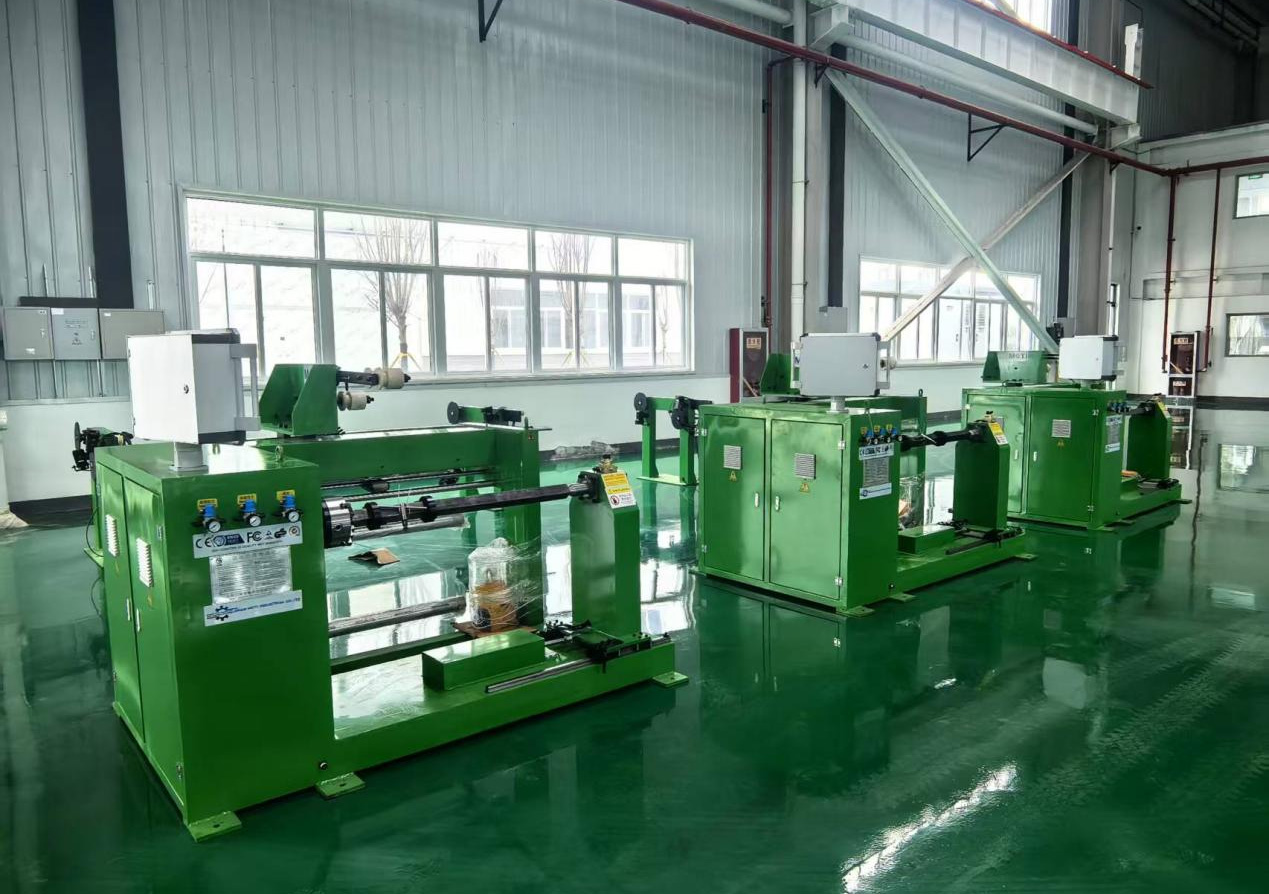
Quality excellence and customer satisfaction remain the core values that guide every aspect of XINSANHUAN’s business operations. Through strict quality assurance, reliable delivery schedules, and comprehensive after-sales support, the company has earned the trust and long-term cooperation of customers around the world. Its commitment to providing dependable products and professional services has established a strong reputation within the global power equipment industry.
Our manufacturing infrastructure integrates high-precision automated core cutting lines, high-tension winding machines with automated tension feedback, vacuum drying and oil impregnation chambers, and a fully shielded High-Voltage Impulse Testing Laboratory. Every transformer undergoes rigorous partial discharge testing, temperature rise validation, lightning impulse withstand tests, and dynamic short-circuit simulation before commissioning.
Looking toward the future, Hanzhong Xinsanhuan Transformer Co., Ltd. will continue to uphold its philosophy of integrity, innovation, quality, and customer focus. By leveraging its strong technical expertise, advanced manufacturing capabilities, and global market experience, the company is committed to building long-term partnerships with customers worldwide and contributing to the development of safe, efficient, and sustainable power infrastructure. Together with its partners, XINSANHUAN strives to create greater value and shape a brighter future for the global energy industry.
Explore our comprehensive lineup of high-voltage substation main transformers, dynamic tap-changing units, specialized earthing transformers, and neutral grounding safety systems.
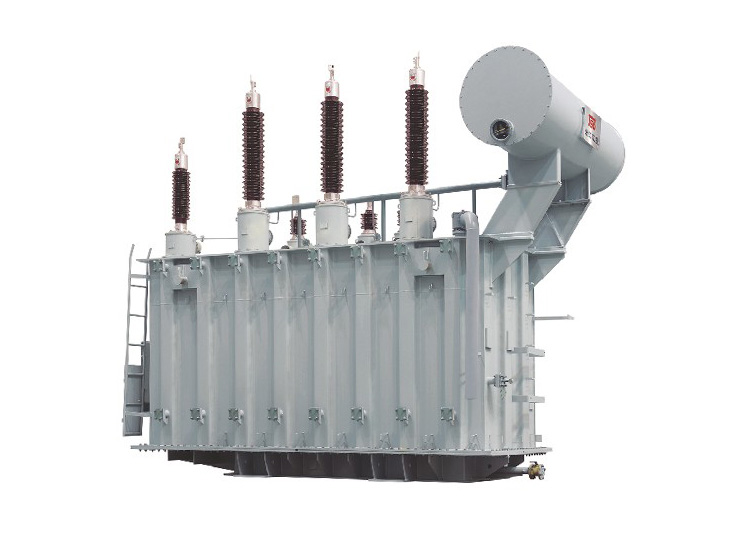
Essential insights for plant electrical directors, substation consulting engineers, and procurement specialists evaluating phase-shifting equipment.
A standard OLTC transformer modifies voltage magnitude in-phase with the system voltage to control reactive power ($Q$) and bus voltage levels. A Phase-Shifting Transformer (PST) injects a quadrature voltage component, altering the relative voltage phase angle ($\delta$) without significant voltage magnitude changes. This provides direct, decoupled control of active power ($P$) flow across parallel transmission corridors and eliminates bottlenecking in heavy furnace supply lines.
Heavy DC arc smelters utilize high-capacity thyristor/IGBT rectifiers that generate substantial harmonic currents. By configuring phase-shifting transformer secondary windings to ±7.5°, ±15°, or 30° phase offsets in 12-pulse or 24-pulse converter bridges, 5th, 7th, 11th, and 13th harmonic currents are vectorially canceled at the transformer's primary input busbar. This dramatically lowers Total Harmonic Distortion ($THD_i$) and prevents resonance without requiring massive external harmonic filter banks.
EAF operations experience hundreds of micro short-circuits daily during scrap collapse and bore-in phases. Our transformers feature high mechanical strength winding clamping structures, high-density densified pressboard insulation, automated continuous disk winding with epoxy-bonded transposition conductors, and reinforced radial magnetic shielding. This rigid design prevents coil axial displacement and mechanical fatigue over decades of continuous furnace cycles.
In ungrounded or high-impedance 10kV-35kV plant networks, single phase-to-ground faults can induce severe transient overvoltages and ferroresonance. Deploying ZN Type Zigzag Neutral Earthing Transformers coupled with Neutral Grounding Resistors (NGR) and ZJB Gap Earthing Devices creates an artificial stable neutral point, limits ground fault current to safe levels (e.g., 100A-1000A), and permits rapid relay trip coordination while protecting furnace transformer windings.