
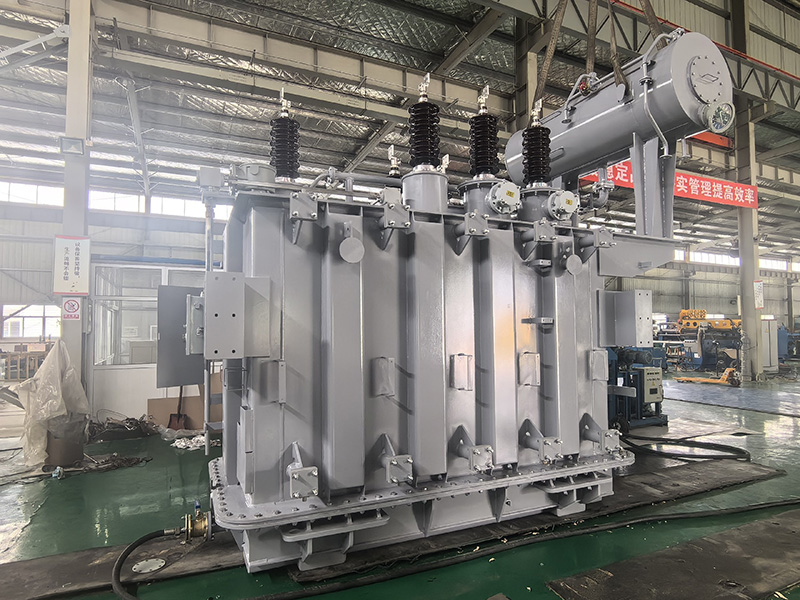
Oil-Immersed Distribution Transformers: A Comprehensive Specification and Procurement Guide for Buyers
If you buy transformers for a living — as a utility procurement engineer, an EPC electrical lead, an importer, or a plant engineer — you already know that the hard part is not finding a supplier. The hard part is writing a specification that gets you a unit which meets code, survives twenty-five years outdoors, and does not quietly lose money every hour it is energised.
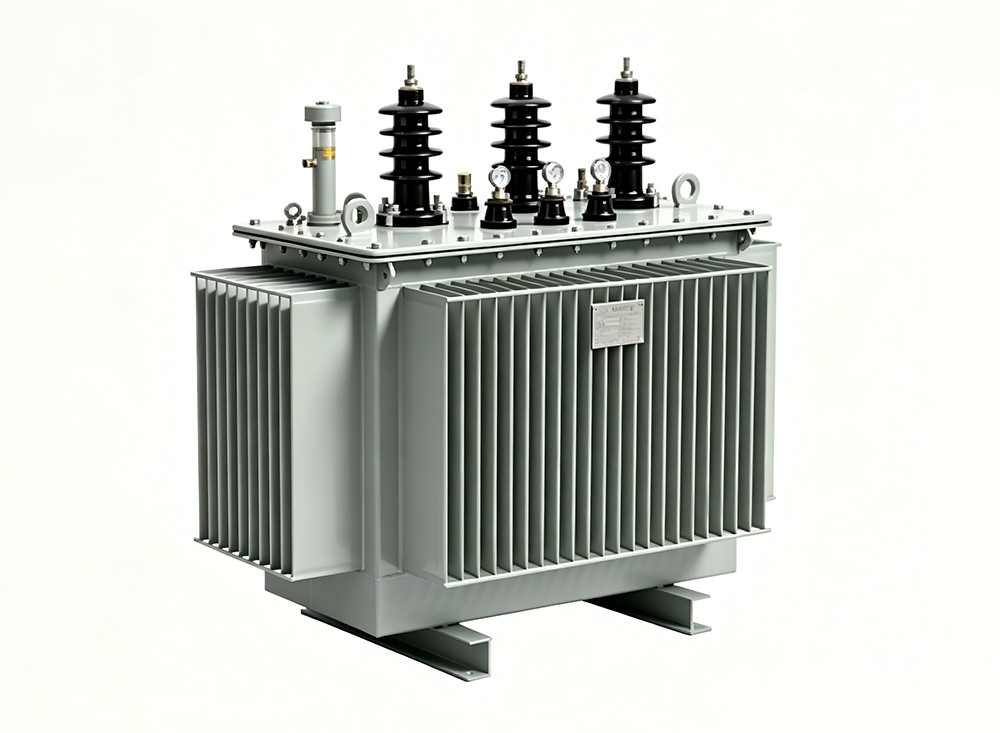
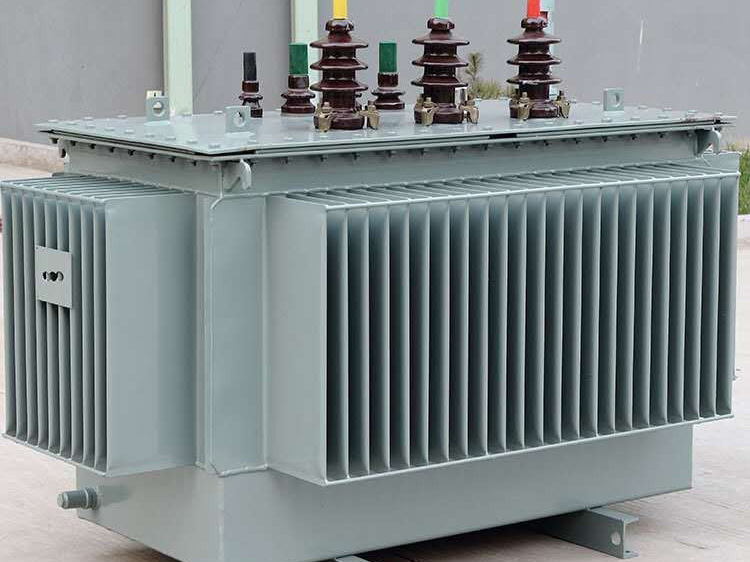
This guide covers what actually matters when you purchase an oil-immersed distribution transformer: how the configurations differ, how to read a specification sheet, what the new US and EU efficiency rules require, how to compare quotations on total cost of ownership instead of first cost, and what documentation you should refuse to pay without.Quick definition: An oil-immersed distribution transformer is a liquid-filled transformer that uses insulating oil as both its dielectric medium and its coolant, stepping distribution-level voltage down to end-use voltage. In the US regulatory definition it covers primaries up to 34.5 kV, secondaries of 600 V or less, and capacities from 10 kVA to 2,500 kVA — a range extended to 5,000 kVA by the 2024 DOE final rule.
1. Why Oil, and When It Beats Dry-Type
The engineering case for oil is thermal. Liquid dielectric transfers heat 20 to 25 times more effectively than air, which means a liquid-immersed transformer can put the same kVA into a substantially smaller tank than an equivalent dry-type unit — and can absorb overload far more gracefully.
That single property drives everything else. Oil-immersed units run cooler at rated load, tolerate the summer peak overloads that distribution networks actually experience, keep moisture and contaminants away from the winding insulation, and sit happily outdoors on a pole, a pad, or in a vault without a weatherproof building around them.
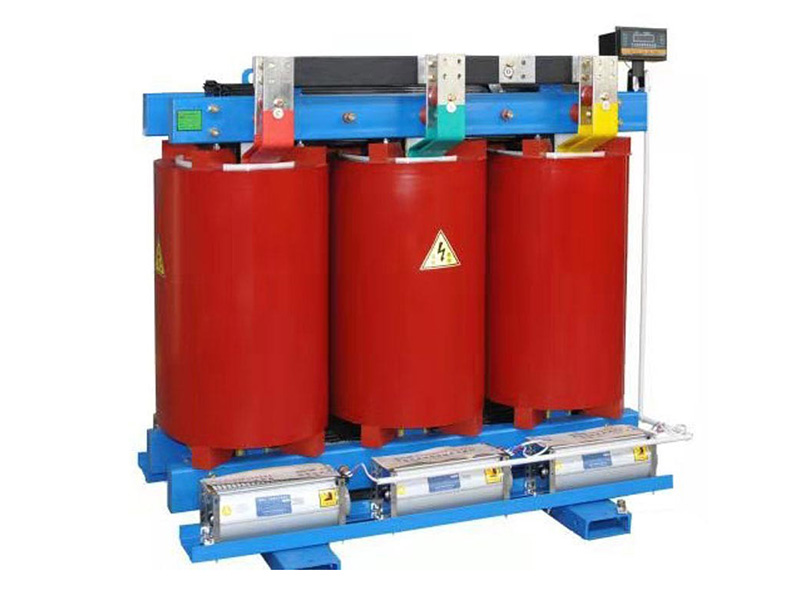
The decision is rarely close. If the unit lives outdoors, in a vault, or on a distribution network, oil-immersed is the default. Dry-type wins when a building code, an insurance underwriter, or a confined indoor location makes flammable liquid impractical — and even then, a natural-ester liquid-immersed unit is often the better answer than moving to air.
2. The Four Configurations You Will Actually See in a Tender
**Pole-mounted (overhead).** Single-phase and small three-phase units, typically 10 to 167 kVA, hung from a distribution pole with a sealed tank and no exposed live parts. Dominant in rural and suburban overhead networks, where line-extension economics matter more than unit cost.
**Pad-mounted.** Ground-level, tamper-resistant enclosure with dead-front or live-front terminations, typically 75 to 2,500 kVA (and up to 5,000 kVA in larger utility practice). The standard choice for commercial and residential underground distribution, and increasingly for urban densification projects where overhead lines are not permitted.
**Substation-type / unit substation.** Larger oil-immersed units, transformer plus switchgear, engineered for distribution substations and industrial plants. Ventilated or pressure-relief equipped, with conservator tanks or radiators as required.
**Submersible / vault-type.** Sealed units designed to operate submerged during flooding — required in many US coastal and riverine networks, and in urban vaults where drainage cannot be guaranteed.
3. How to Read an Oil-Immersed Transformer Specification Sheet
Most procurement mistakes are specification mistakes. These are the parameters that change price, lead time, and long-term cost, in the order they typically appear on a data sheet.
| Parameter | What it controls | Typical range | Commercial consequence |
|---|---|---|---|
| Rated capacity (kVA) | Throughput | 10 – 2,500 kVA standard; to 5,000 kVA | Non-standard ratings add cost and lead time; standard ratings are cheaper and faster |
| HV / LV winding voltage and Um | Connection to network | e.g. 11 kV / 433 V, 13.8 kV / 480 V, 34.5 kV / 480 V | Determines insulation class, BIL, and clearances |
| Tapping | Voltage regulation headroom | ±2 × 2.5% off-circuit typical; OLTC on request | Off-circuit taps are standard and cheap; OLTC adds significant cost |
| Vector group | Phase displacement, parallel operation | Dyn11, Yyn0, Dyn5, YNd11 | Wrong vector group blocks paralleling with the existing fleet |
| Impedance voltage (%) | Fault current limiting | ~4 – 6% at distribution sizes | Higher impedance reduces fault duty but increases voltage drop and losses |
| Cooling class | Heat rejection | ONAN, ONAF, KNAN | ONAF adds fans, auxiliaries, and maintenance |
| Winding temperature rise | Insulation ageing rate | 55 K or 65 K | 65 K gives more capacity in the same frame but shortens life at sustained load |
| Insulation level / BIL | Impulse withstand | e.g. 95 kV BIL at 15 kV class; 150–200 kV at 36 kV class | Driven by the utility's system BIL standard |
| No-load loss (Po) and load loss (Pk) | Annual energy cost | See efficiency tables below | The single largest lifecycle cost lever — see Section 5 |
| Sound level dB(A) | Noise compliance | 45 – 65 dB(A) typical | Critical for residential and urban installations |
| Insulating fluid | Fire safety, environment | Mineral oil, natural ester, silicone | Ester fluids cost more but may remove containment requirements |
| Tank design | Sealing and oil expansion | Sealed/hermetic, conservator, corrugated, radiator | Affects maintenance regime and altitude/temperature limits |
| Surface protection | Corrosion life | Hot-dip galvanised + C4 or C5-M paint system | Determines whether the unit survives coastal or humid service |
| Accessories | Monitoring and protection | Buchholz relay, PRV, oil level gauge, WTI/OTI, breather, marshalling box | Frequently the difference between two apparently identical quotations |
| Standards | Compliance basis | IEC 60076, IEEE C57.12.00, EN 50588-1 | Determines which test evidence is valid for your market |
A practical warning on "equivalent" quotations. When two suppliers quote the same kVA at materially different prices, the gap is almost always in the loss values, the winding material, the paint system, or the accessory list — not in the core and coil. Ask for a line-by-line accessories and loss declaration before you compare price.
4. Efficiency Regulation: DOE 2029 and EU Ecodesign Tier 2
Efficiency rules are now the dominant constraint on distribution transformer design in both the US and EU markets. If you buy for both, you are designing to two different loss ceilings.
4.1 United States — DOE amended standards, compliance 23 April 2029
The US Department of Energy published its final rule on distribution transformer energy conservation standards in April 2024. Compliance with the amended standards is required for equipment manufactured or imported on and after 23 April 2029. The requirement is expressed as a minimum efficiency at 50% of nameplate-rated load.
The loss-reduction structure is deliberately uneven across equipment classes:
- About 20% loss reduction — single-phase liquid-immersed transformers above 100 kVA, and three-phase liquid-immersed transformers below 500 kVA.
- About 5% loss reduction — single-phase liquid-immersed transformers at or below 100 kVA, and three-phase liquid-immersed transformers at or above 500 kVA.
Two details are routinely mis-reported in industry commentary, and both matter to buyers:
- The larger class gets the softer treatment. Several widely circulated summaries invert this and claim the 20% reduction applies above 500 kVA. The Federal Register text does the opposite. The heavier requirement sits below 500 kVA three-phase.
- The final rule does not name a core material. Everything you have read about amorphous cores is an inference about how manufacturers will hit the numbers — the rule publishes efficiency, not metallurgy. The final rule did soften the effective requirement enough that roughly three quarters of the market can comply on grain-oriented electrical steel rather than shifting to amorphous alloy.
Minimum efficiency, three-phase liquid-immersed, at 50% per-unit load (10 CFR 431.196, Table 6):
| kVA | Manufactured before 23 Apr 2029 | Manufactured on or after 23 Apr 2029 |
|---|---|---|
| 15 | 98.65% | 98.92% |
| 30 | 98.83% | 99.06% |
| 45 | 98.92% | 99.14% |
| 75 | 99.03% | 99.22% |
| 112.5 | 99.11% | 99.29% |
| 150 | 99.16% | 99.33% |
| 225 | 99.23% | 99.38% |
| 300 | 99.27% | 99.42% |
| 500 | 99.35% | 99.38% |
| 750 | 99.40% | 99.43% |
| 1,000 | 99.43% | 99.46% |
| 1,500 | 99.48% | 99.51% |
| 2,000 | 99.51% | 99.53% |
| 2,500 | 99.53% | 99.55% |
| 3,750 | Not covered | 99.54% |
| 5,000 | Not covered | 99.53% |
Note the shape of the right-hand column. The 2029 curve is not monotonic. A 300 kVA unit is held to 99.42% while a 500 kVA unit is held to only 99.38% — a larger transformer is permitted to be less efficient than a smaller one. The 2016 curve rose smoothly with size; the 2029 curve steps backward at 300→500 kVA and again at 2,500→5,000 kVA. Two commercial consequences follow:
- "Meets DOE 2029" is meaningless without the rating attached. Ask for the certified loss values at your specific kVA, not a compliance statement.
- Ratings above 2,500 kVA were outside federal scope before 2029. Coverage now extends to 5,000 kVA, which changes the compliance maths on larger pad-mounted and substation units for the first time.
4.2 European Union — Ecodesign Regulation (EU) 548/2014, Tier 2
In the EU the governing instrument is Commission Regulation (EU) 548/2014, applied through the harmonised standard EN 50588-1. Tier 2 limits have applied since 1 July 2021, and they cap no-load and load losses in watts rather than setting an efficiency percentage — so EU and US numbers are not directly comparable.
Tier 2 maximum losses, three-phase liquid-immersed, ≤24 kV / ≤3.6 kV, 50 Hz:
| kVA | Max no-load loss Po (W) | Max load loss Pk (W) |
|---|---|---|
| ≤ 25 | 63 | 600 |
| 50 | 81 | 750 |
| 100 | 130 | 1,250 |
| 160 | 189 | 1,750 |
| 250 | 270 | 2,350 |
| 315 | 324 | 2,800 |
| 400 | 387 | 3,250 |
| 500 | 459 | 3,900 |
| 630 | 540 | 4,600 |
| 800 | 585 | 6,000 |
| 1,000 | 693 | 7,600 |
| 1,250 | 855 | 9,500 |
| 1,600 | 1,080 | 12,000 |
| 2,000 | 1,305 | 15,000 |
| 2,500 | 1,575 | 18,500 |
| 3,150 | 1,980 | 23,000 |
Intermediate ratings are determined by linear interpolation. The regulation also grants loss allowances where winding voltage combinations differ from the base case — up to +20% on no-load and +15% on load losses for specific 36 kV configurations — so always confirm which table row your voltage combination actually maps to.
5. Loss Capitalisation: The Number That Actually Decides the Order
Here is the calculation that separates experienced buyers from everyone else.
A distribution transformer consumes its own purchase price in losses, several times over. Typical utility practice assumes a service life of around 32 years. Over that horizon, the present value of the energy lost inside the unit usually exceeds its capital cost — frequently by a wide margin.
The standard commercial tool is loss capitalisation. You ask each bidder for guaranteed loss values and then evaluate:
Total cost of ownership = Purchase price + (A × Pk) + (B × Po)

where:
  Pk = guaranteed load loss in watts (at 75 °C or as specified)
  Po = guaranteed no-load loss in watts
  A  = capitalised value of 1 W of load loss, in currency per watt
  B  = capitalised value of 1 W of no-load loss, in currency per watt
The two factors differ because no-load loss runs continuously while load loss scales with the square of loading.
Worked example — 1,000 kVA three-phase distribution transformer
Assumptions: energy cost USD 0.10/kWh, real discount rate 8%, 25-year evaluation period, loss factor 0.30.
- Present-worth annuity factor over 25 years at 8% = 10.68
- 1 watt running continuously = 8.76 kWh/year → USD 0.876/year
- B = 0.876 × 10.68 = USD 9.35 per watt of no-load loss
- A = 9.35 × 0.30 = USD 2.80 per watt of load loss
Now apply a Tier-2-level unit (Po = 693 W, Pk = 7,600 W):
| Component | Calculation | Value |
|---|---|---|
| Capitalised no-load loss | 693 W × USD 9.35 | USD 6,480 |
| Capitalised load loss | 7,600 W × USD 2.80 | USD 21,280 |
| Total capitalised loss cost | USD 27,760 |
The loss cost is roughly 1.5 to 2 times the purchase price of the unit.
The practical consequence is immediate. Suppose a supplier offers to cut 1,000 W of load loss for a price premium of USD 1,500. The value of that saving is 1,000 × USD 2.80 = USD 2,800. The upgrade pays for itself roughly twice over before the transformer is even energised. Now run the same comparison on 500 W of no-load loss: 500 × USD 9.35 = USD 4,675 of value, which is why low-loss core steel earns its premium far more reliably than extra copper in the windings.
What to do with this:
- Publish your own A and B factors in the enquiry document. Suppliers who can engineer to a loss target will respond; brokers will not.
- Require guaranteed loss values with a tolerance penalty clause. Unspecified "typical" values are worthless.
- State the reference temperature for load loss (75 °C and 85 °C give materially different numbers).
- Re-run the calculation across at least three kVA steps. Over-sizing to reach a standard rating is often cheaper than a custom-unit premium and lowers loss density.
6. Insulating Fluid Selection: Mineral Oil, Natural Ester, or Silicone
Fluid choice is now a genuine procurement decision rather than a formality, driven by fire code, spill liability, and environmental permitting.
Property Mineral oil Natural ester (vegetable-based) Silicone / synthetic ester Fire point ~160 °C >300 °C >300 °C Biodegradability Low High (readily biodegradable) Moderate Moisture tolerance Low High — absorbs water and keeps it from the paper Moderate Cost index 1.0 (baseline) Higher High Typical UK/US fire classification Less than "less-flammable" Qualifies as less-flammable / K-class fluid Qualifies as less-flammable Thermal headroom Standard limits Permits elevated top-oil and hot-spot limits Standard limits Best fit Standard outdoor pole, pad, and substation duty Urban and environmentally sensitive sites, wildfire zones, indoor-adjacent installations Extreme cold, specialist indoor and high-fire-risk installations Retrofit caution — Requires gasket and seal material validation on existing units Requires specialist handling Two procurement points that are frequently missed. First, natural ester fluids can permit elevated temperature rise limits under IEC 60076-14, which means a smaller, cheaper frame can deliver the same kVA — the fluid premium is sometimes offset by core and tank savings. Second, switching fluid type is not a like-for-like substitution: gasket, seal, and paint compatibility must be validated, and the loss values will change.
7. Testing and Documentation You Should Refuse to Pay Without
Test scope is where a low quotation hides. These are the minimum requirements for a distribution transformer entering a utility or industrial network.
Routine tests — every unit, non-negotiable:
- Turns ratio and polarity / vector group verification
- Winding resistance measurement
- No-load loss and no-load current measurement
- Load loss and impedance voltage measurement
- Applied voltage (dielectric) test
- Induced voltage test
- Insulation resistance (windings to earth, winding to winding)
- Insulating oil dielectric strength, moisture, and dissolved gas screen
Type tests — once per design, from an accredited laboratory:
- Lightning impulse test (IEC 60076-3 / IEEE C57.12.90)
- Temperature rise test
- Short-circuit withstand test (IEC 60076-5), 2 seconds
Special tests, order-specific:
- Partial discharge measurement
- Sound level measurement (IEC 60076-10)
- Zero-sequence impedance
- Harmonics / K-factor loading capability
Documents to require with every shipment:
- Routine test report, signed and dated, with measured values — not just pass/fail
- Type test report issued by a recognised independent laboratory
- Nameplate data confirming compliance with IEC 60076-1
- Oil test certificate and fluid manufacturer's data sheet
- Outline and dimensional drawings, plus the filled weight for rigging and pad design
- Winding material declaration (copper or aluminium, stated explicitly)
- Surface protection specification and dry-film thickness
- Packing list, and the documentation set your destination customs authority requires
- Warranty terms, in writing, including the loss-guarantee tolerance
If a supplier cannot produce items 1, 2, and 6, the quotation is not comparable to the others in your bid tabulation.
8. What Actually Drives Price and Lead Time
When quotes scatter across a 40% range for the same rating, these are the levers.
- Winding conductor. Copper costs more, has lower losses, better short-circuit withstand, and a longer thermal life. Aluminium reduces cost but generally requires more core and tank volume to hit the same efficiency, which eats part of the saving — and it is a poor fit where short-circuit duty is high.
- Core steel grade. Conventional grain-oriented electrical steel versus high-permeability, laser-scribed, or domain-refined grades. Core material is the principal lever on no-load loss, and it is the reason the US 2029 rule is a steel question more than a design question.
- Requested loss level. Specifying losses meaningfully below the regulatory floor — which loss capitalisation often justifies — moves the unit up a significant cost tier.
- Standard versus non-standard kVA. Custom ratings mean bespoke core and coil geometry and a longer, higher-cost production slot. Standard ratings remain cheaper and faster even when they appear to oversize the load.
- Tank and accessory scope. Conservator versus sealed, radiators versus corrugated panels, and the accessory list — each relay, gauge, and marshalling-box terminal adds cost and lead time.
- Certification scope. UL, CSA, and CE marking, together with third-party type testing, add cost and calendar time. Buying for two markets doubles the documentation burden.
- Order structure. Framework agreements and repeat volumes earn better pricing and faster scheduling than one-off tenders, and suppliers will usually trade price for schedule visibility.
-
Raw material timing. Copper and electrical steel prices move; a quoted price is often valid for a defined window only. Lock the validity period into the purchase order.
9. Ten Questions to Ask Before You Issue the Purchase Order
- What are the guaranteed no-load and load loss values, at what reference temperature, and what tolerance applies?
- Which kVA row of 10 CFR 431.196 (or EU 548/2014 Tier 2) does this unit comply with, and can I see the measured routine test values?
- Is the winding copper or aluminium — and if aluminium, how was the efficiency requirement met?
- Which vector group, and is it compatible with the network I am paralleling into?
- What is the impedance voltage, and what fault current does it produce at my secondary busbar?
- Which surface protection system, and is it rated for the corrosivity category of my site?
- What is the filled weight, and what pad and rigging provisions do I need?
- Which laboratory issued the type test reports, and are they traceable to this design?
- What is the noise level at rated load, in dB(A), and does it meet my site's limit?
- What is the warranty, the loss-guarantee remedy, and the price validity period?
Frequently Asked Questions
What is the difference between an oil-immersed and an oil-filled distribution transformer? They describe the same product. "Oil-filled" and "oil type" are informal industry terms; "liquid-immersed" and "oil-immersed" are the formal designations used in IEC 60076 and IEEE C57.12.00. Any of the three may appear in a tender document, and all refer to a transformer using insulating liquid for dielectric strength and cooling.
What size oil-immersed distribution transformer do I need? Size from the connected load, not the nameplate sum. Apply the applicable diversity and demand factors, project the load five to ten years forward, then select the smallest standard rating that covers the projected demand with margin. Confirm the resulting loss values against your capitalised loss factors before you finalise — a slightly larger standard unit sometimes wins on total cost of ownership.
Does an oil-immersed distribution transformer meet DOE 2029? Compliance is set per kVA rating, not as a general property of the design. A three-phase liquid-immersed unit manufactured or imported on or after 23 April 2029 must meet the minimum efficiency listed for its specific rating in 10 CFR 431.196 — 99.38% at 500 kVA, 99.40% interpolated at 600 kVA, 99.46% at 1,000 kVA, for example. Ask for the certification against your rating.
Can I install an oil-immersed transformer indoors? Sometimes, but it is a code decision rather than a product decision. Standard mineral-oil units are normally restricted by fire code in indoor occupancies; natural-ester and silicone units classified as less-flammable fluids are frequently permitted, subject to the local authority having jurisdiction, appropriate clearances, and containment where required. Confirm the fire classification of the specific fluid before design freeze.
How long does an oil-immersed distribution transformer last? DOE's own analysis assumes an average service life of approximately 32 years for distribution transformers. Achievable life depends heavily on sustained winding temperature, moisture control in the oil, and load profile — a unit held below rated load with an intact sealed tank routinely exceeds that figure.
What is the difference between ONAN and ONAF cooling? ONAN means oil natural, air natural — heat convects through the oil and dissipates passively from the tank surface. ONAF adds fans to force air across radiators, raising the permissible load for the same unit. ONAF increases usable capacity but adds auxiliary power, moving parts, and a maintenance item. Distribution transformers are usually ONAN; ONAF appears on larger substation-class units.
How often should transformer oil be tested? For distribution units, annual dissolved gas analysis plus moisture and dielectric strength testing is common utility practice, with more frequent sampling on units showing rising gas trends or operating at sustained high load. Sealed and hermetic designs require considerably less attention than conservator types with a breather.
Sourcing an Oil-Immersed Distribution Transformer
Every unit in this guide can be specified in a single enquiry if the technical inputs are clear: kVA rating, HV and LV voltages, frequency, vector group, impedance, cooling class, loss values or the regulatory class you are targeting, fluid type, surface protection category, accessory list, and the standards you require compliance with.
If you are looking for high-quality, stable, and efficient transformers, Hanzhong "Xinsanhuan" brand transformers are your best choice. Please feel free to contact us!